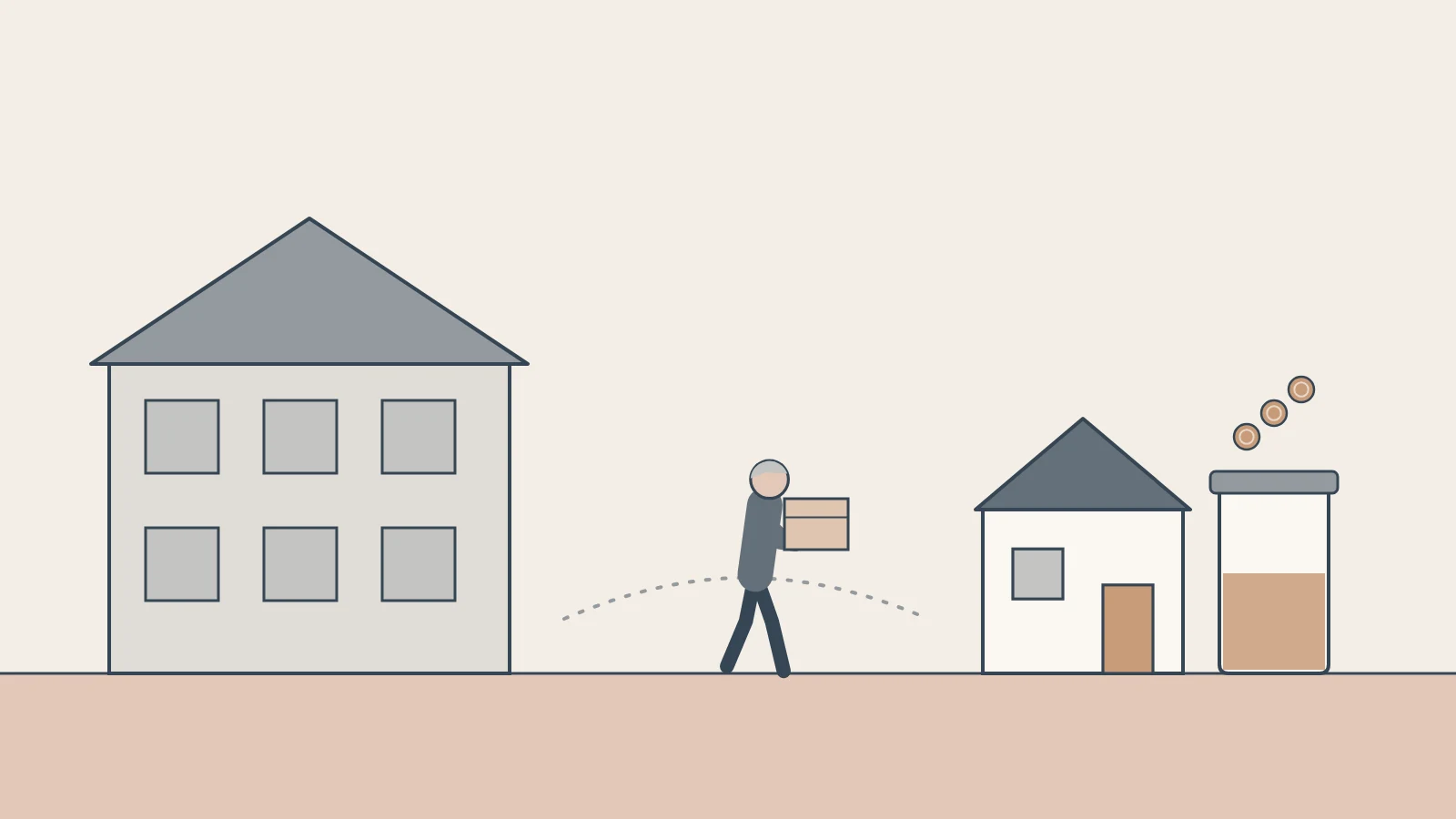

The children have left, the garden is too big and the stairs are getting steeper. Should I downsize? For people in their sixties, the family home is often the largest thing they own. Downsizing can release money for retirement, and the downsizer contribution lets part of it go into super. Whether it releases as much as people expect is a different question.
What downsizing really releases
The gap between the sale price and the price of the next home is not what you keep. There are agent’s fees and marketing on the way out, and stamp duty, legal costs and moving on the way in. A smaller home in the same area can cost more than people expect. Once those are counted, the money released can be well short of the gap between the two prices.
How the downsizer contribution works
If you are 55 or older and sell a home you have owned for at least ten years, you can put up to $300,000 of the proceeds into super as a downsizer contribution. Your spouse can do the same, as long as the total does not exceed the sale proceeds. The sale has to qualify, at least in part, for the main residence exemption from capital gains tax. The money goes in within 90 days of receiving the proceeds, usually from settlement, with the ATO’s form given to your fund.
It does not count towards the usual contribution caps, and you do not have to buy another home. It does count towards your total super balance, and it can be used for the sale of one home only.
The Age Pension catch
The home you live in is not counted in the Age Pension assets test. The money from selling it, whether it sits in super or the bank, generally is. Downsizing can lift your income from super and lower your pension at the same time. Both sides are worth running before the house is listed.
A couple sell the family home and buy a smaller one nearby. After costs they release a little over $400,000 and put it into super under the downsizer rule. Their super income rises. Their part pension falls, because that money now counts in the assets test. They are still ahead, but by less than they expected, and they wish they had seen the trade before they signed.
Who this does not suit
A home close to family, friends and doctors is worth more than its price to most people, and moving away from that is a cost no spreadsheet shows. Some find the home they want next costs nearly as much as the one they have. And for some, a property in the portfolio can release the money instead of the home. Downsizing is a decision about where you live first, and only then about money.
Downsizing changes your home, your super, your pension and sometimes your family’s plans, all at once. I model those changes side by side with people before the house is listed, so the trade is seen in advance. If you are weighing it, the first conversation costs nothing.
Nicholas Lockhart
This article reflects the rules as at 10 October 2026. The ATO and Services Australia can confirm how they apply to you.
Source: ATO, Downsizer super contributions (updated 20 January 2026).