Part 1The decade that slips away
Think back ten years. Where were you living? What were you earning? What did you tell yourself you would do "when things settle down"?
Most of us meant to build wealth. Almost everyone does. But weeks slip into months, months into years, and years into decades. There is always a reason to wait: rates are too high, prices are too high, the news is too uncertain, the timing is not quite right. And then one day you look up and the decade is gone.
Here is a small example from the suburb in this booklet. Over the five years to 31 October 2026, the median value of a house in Tweed Heads West rose by about 29%. On an $800,000 home, that is about $236,000. The people who owned one did not need to be clever. They only needed to be in.
Cotality data via OnTheHouse, five years to 31 October 2026. A past figure, not a forecast.
Two questions worth sitting with
| Look back | Look forward |
|---|---|
| What did you actually do with the last ten years of your money? | If the next ten years look like the last ten, where does that leave you? |
| What stopped you: fear, or the belief that it would all work out on its own? | What would it be worth to you to make the next decade count? |
This booklet is not really about a block of land. It is about a way of seeing. Once you learn to see where value hides, you will notice it everywhere. The estate at the end is simply a live example.
Both have stopped working. Only one of them has stopped worrying.
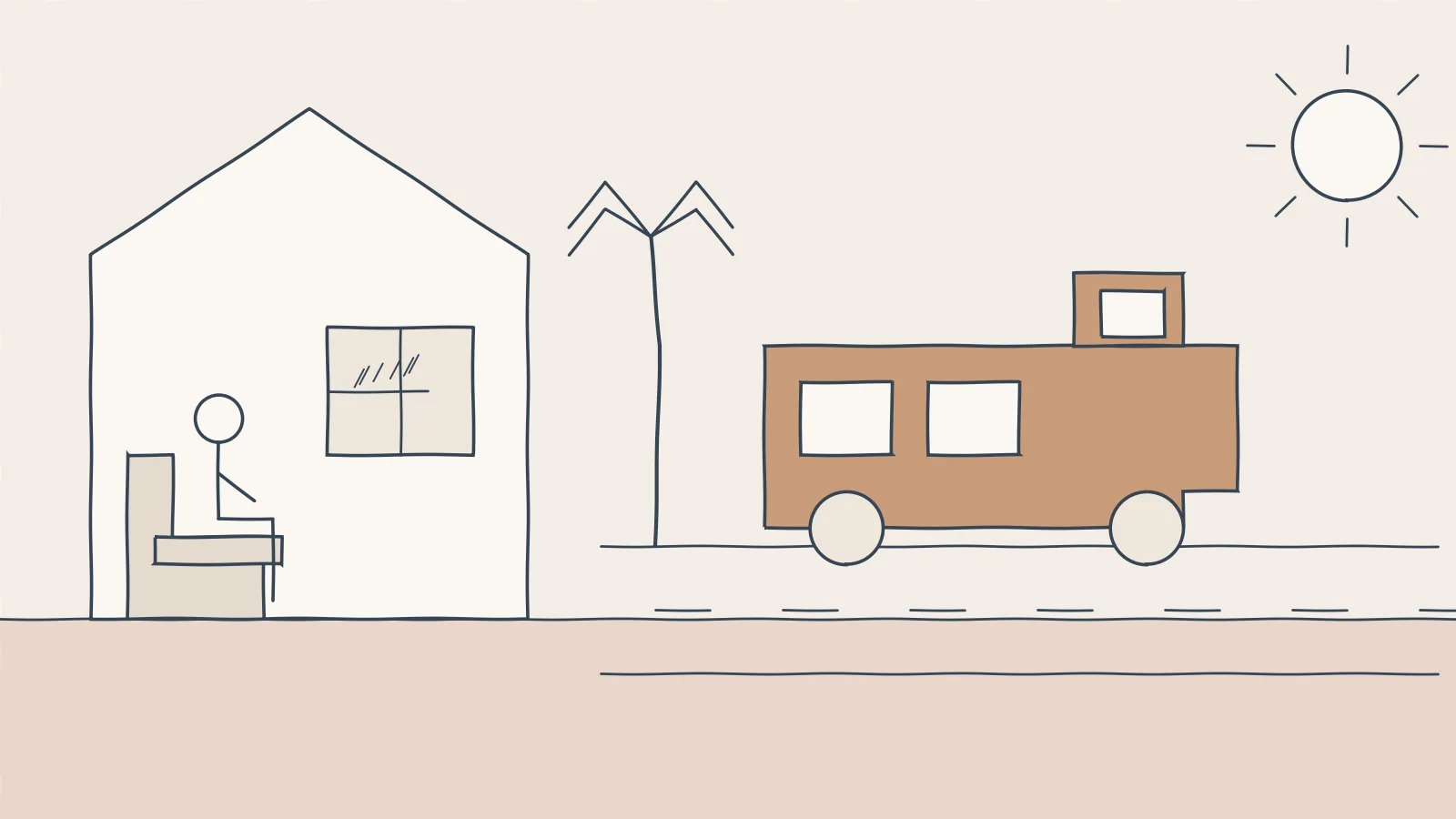
Imagine a life where you no longer have to get up and go to work, but you have no money to do anything with the time.
The other life looks very different. A trip somewhere in the world every year. Three months away if you feel like it. A motorhome, and the whole of Australia to drive around. Same free time; a completely different life.
Full Age Pension from 20 September 2026: $1,866.00 a fortnight for a couple, including supplements (Services Australia). ASFA Retirement Standard, June quarter 2026, homeowners aged 65 to 84. ASFA estimates a couple needs about $730,000 in super, with a part pension, to fund the comfortable standard from 67.
More than half of Australians aged 65 and over, 56% in March 2025, receive the Age Pension (Australian Institute of Health and Welfare). Most of them probably spent their working lives believing they were doing the right thing and were on track for a comfortable retirement.
What went wrong?
For most, it was not laziness. It was one of two things. Either it was fear: they waited for a certainty that never came. Or it was an error: they believed the old script. Study hard, get a good job, pay into your super, and everything will be fine. For most people, it is not enough on its own.
There are exceptions: an inheritance, or a rare talent that pays very well, like a professional athlete's. For everyone else, if you want to be wealthy you have to be clinical about your finances. You have to decide to be the person in the motorhome, and then make choices that get you there.
Some people can pick up an old car from a garage sale or Carsales and turn it into a classic. Others can take a tired piece of furniture that everyone else walked past and bring it back to life. They buy cheaply what others dismiss, and they add a great deal of value.
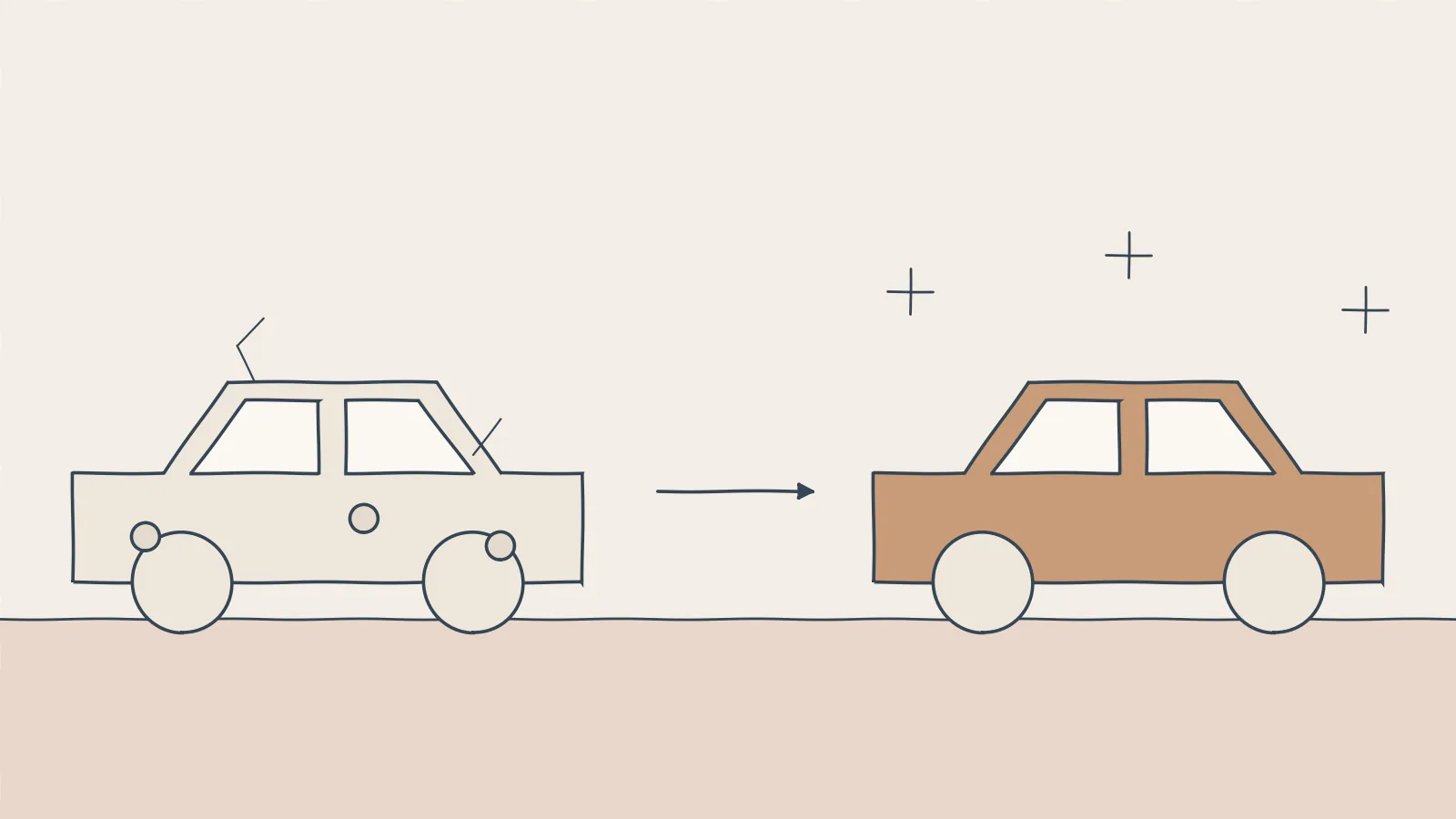
Not everyone can restore a car. But almost anyone can learn to recognise the same pattern in property: something that is underpriced today because people judge it by the way it looks today.
Most people judge by today
| What most buyers ask | What I ask |
|---|---|
| How does it look today? | What will it look like in ten years? |
| What does it cost today? | What is it likely to be worth once others catch on? |
| What does it rent for today? | Is rental demand rising faster than buyers have noticed? |
| What is the area like today? | What is being built, fixed or planned around it? |
| Does it have a problem today? | Is the problem already fixed, or being fixed? |
Fear fills the void that a lack of knowledge leaves behind. When most buyers are frightened of something, the price usually reflects their fear, not the facts. Warren Buffett's version: be "greedy when others are fearful". That is not permission to be reckless. It is an invitation to do your homework while everyone else looks away.
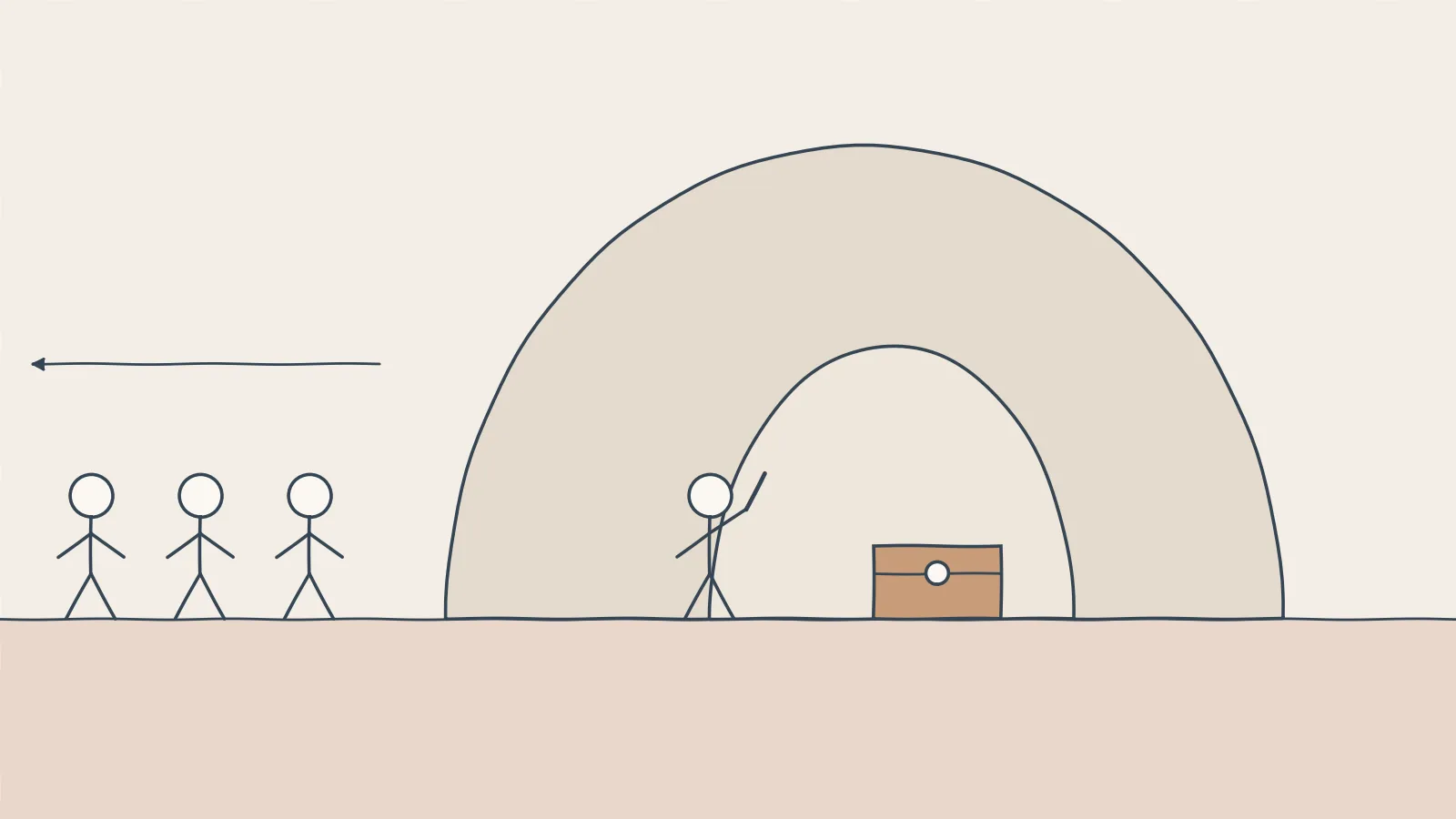
Every market has a cave: a suburb with a reputation, a stigma or an unanswered question that keeps most buyers walking past. The opportunity is rarely at the entrance where everyone is standing. It is further in, where people are too scared to go and look around.
What gentrification means
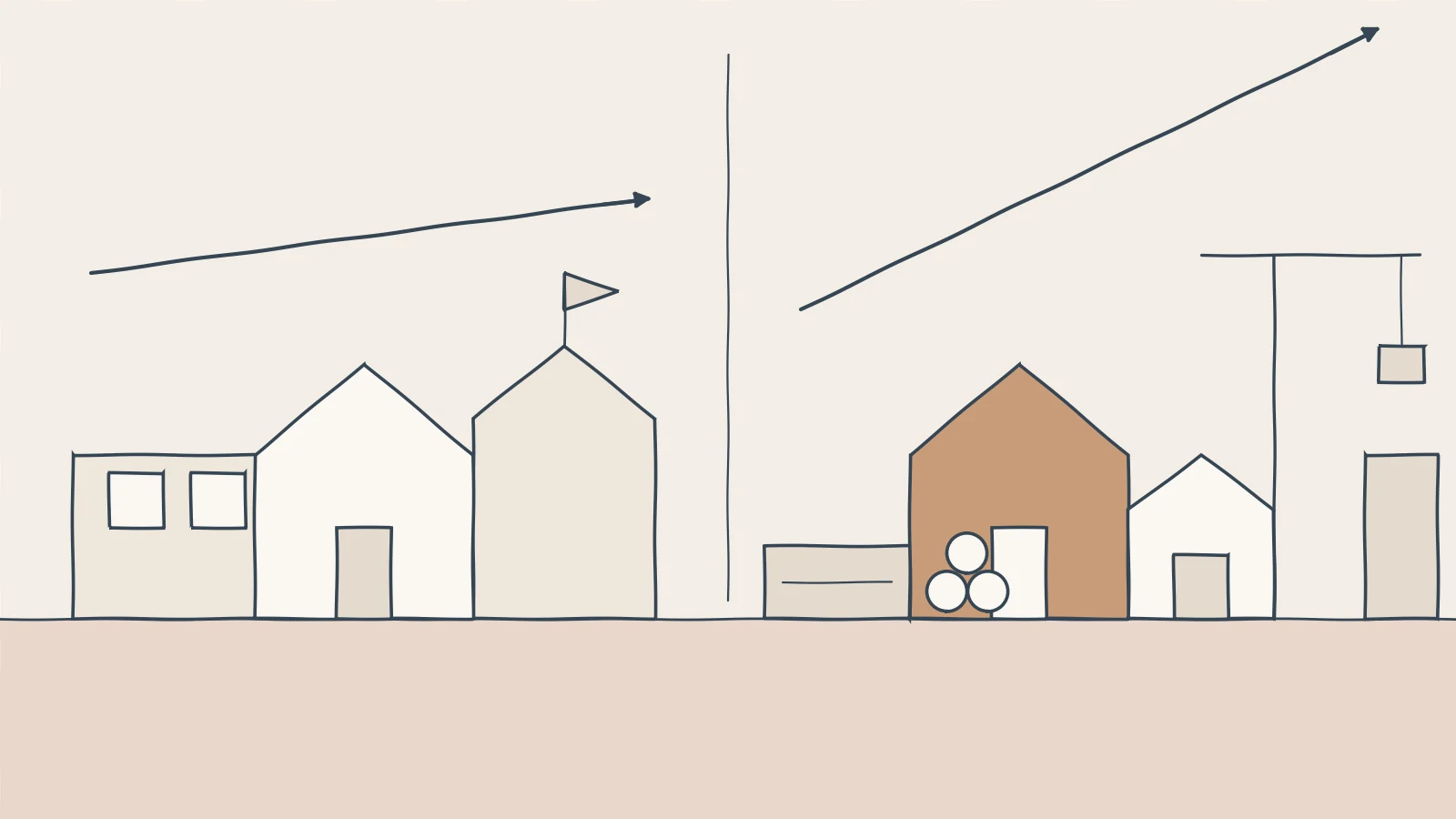
Gentrification is what happens when an overlooked, lower-priced area starts to lift. New money, new residents and new infrastructure arrive. Older homes are renovated or replaced. Shops, cafes and services follow. The reputation changes, and prices close the gap with the suburbs around it.
When a suburb lifts, every home in it tends to lift with it. You do not need to be the one who does the lifting. You only need to own a home there before it happens, if it does.
Five signs I look for
- A price gap with the suburbs around it, for reasons that can change.
- Tenants who want to live there, even while buyers hesitate.
- A problem someone is obliged to fix, such as roads, drainage or access.
- Growth next door: thousands of new homes planned nearby.
- A location the city has grown towards, near jobs, transport, beaches and an airport.
My first MRD project, in 2002, was a boutique apartment block at Palm Beach on the Gold Coast, about 200 metres from the water. Locals would not buy there. The suburb had a social security office, many people out of work, and run-down cheap rentals. People had made up their minds about it.
The buyers who did come were from Sydney, Melbourne and Perth. They listened to a simple idea: Burleigh Heads on one side, Currumbin on the other, and Palm Beach the thorn in between. Money would flow in, the old stock would be pulled down and replaced, and the whole area would lift.
Nicholas's own record and estimate of today's value; not a valuation.
Palm Beach became the talk of the Gold Coast. That is gentrification, seen from the inside. The locals who stayed away were not foolish; they judged it by how it looked that day. The buyers who did well saw what it was becoming.
I have been doing this since 1997, through booms, busts, rate rises and every kind of headline. The pattern repeats. When people are scared they put the brakes on, prices ease, and they wait for the herd to feel safe again. Then they buy the home they could have bought earlier, often for a great deal more.

Part 6Tweed Heads West: a cave worth exploring
Tweed Heads West sits on the NSW side of the border, minutes from Coolangatta, the beaches and Gold Coast Airport. Yet it is priced well below the suburbs around it.
Tweed Heads West about $1.19 million (Microburbs, latest 12 months; other services $1.10 to $1.19 million). Tweed shire $1,306,250 (PRD, Q2 2026). Banora Point, Tweed Heads, Kingscliff and Casuarina: PRD, rolling 12 months, financial year 2026. A guide only; figures vary between sources.
Tenants want to live here. The median house rent is around $875 to $915 a week and the vacancy rate is under 1%. Buyers are more hesitant. That gap between strong renting demand and hesitant buying demand is exactly what I look for.
Why it is cheaper, and why that can change
| What most people see | What you can see |
|---|---|
| "It's a flood area." | At Sandpiper the lots were filled to about 3 to 4 m above sea level, and council's rules require every living area to be built at or above the flood planning level of 3.4 m, a half-metre above the planning flood of 2.9 m. |
| "The road floods." | In rare major floods, Kennedy Drive can be cut for a few days. Under its own planning rules, council must be satisfied that new homes on flood-prone land will not harm safe occupation and evacuation. Thousands more homes are planned to the west. In my view, the pressure to fix access grows with every home built. |
| "The traffic is bad." | It is, at peak times. Roads that have not kept up with people are a problem a growing area is forced to solve. |
| "It's near the airport." | The developer's specification has an acoustic engineer assess every lot, and the build follows that report. And an airport brings workers and visitors who need to live nearby, with passenger numbers expected to roughly double by 2044. |
Sources: RPS town planning advice for the estate (18 June 2026); Tweed LEP 2014 cl 5.21 and DCP A3; NSW SES; Cobaki Lakes approvals (about 5,500 homes); Gold Coast Airport master plan; developer acoustic specification (August 2026); rent and vacancy from CoreLogic data via property data services (2026).
Part 7Three ways in: one estate, three homes
Sandpiper Estate is a boutique estate of 54 homesites in Tweed Heads West. Here are three different ways to own a home there, each with the same location and the same lift if the suburb lifts.
Lot 52 single home
4 bed, 2 bath (Miami 196)
Each week. To guests, market average. After tax, 32% tax rate
−$263
- What it is
- 4 bed, 2 bath (Miami 196)
- Land
- 623 m²
- Price
- $1,401,306
- Long-term rent
- $1,300 to $1,350 a week
- Gross yield on a lease
- About 4.9%
What each would do to your cash every week
Long-term lease
To guests, market average
To guests, busier end
Lot 43 dual-income home
4-bed home + 2-bed home under one roof, one title (Echo 255)
Each week. Both sides to guests, market average. After tax, 32% tax rate
+$336
- What it is
- 4-bed home + 2-bed home under one roof, one title (Echo 255)
- Land
- 521 m²
- Price
- $1,471,177
- Long-term rent
- $1,900 to $2,000 a week combined
- Gross yield on a lease
- About 6.9%
What each would do to your cash every week
Long-term lease, both homes
Both sides to guests, market average
Both sides to guests, busier end
Lot 1 duplex pair
Two attached 4-bed homes; to be strata titled into two lots (Driftwood 364)
Each week. Both homes to guests, market average. After tax, 32% tax rate
+$305
- What it is
- Two attached 4-bed homes; to be strata titled into two lots (Driftwood 364)
- Land
- 657 m²
- Price
- $1,933,089
- Long-term rent
- $2,200 to $2,300 a week combined
- Gross yield on a lease
- About 6.1%
What each would do to your cash every week
Long-term lease, both homes
Both homes to guests, market average
Both homes to guests, busier end
Developer packages (August 2026). Registration expected Q1 2027. Rents: Tate Brownlee Real Estate appraisals (4 August 2026) and package figures. Gross yield is rent before any costs, divided by price. Lot 1 figures use the Driftwood 364 package for Lot 54 with Lot 1's land price.
Bold: money in your pocket. A minus: what you would top up. After running costs and interest on 100% borrowed (including purchase costs, interest during the build and, for a holiday let, furniture), at 6.89% interest only. First full year, with depreciation. Each of these homes is newly built. A newly built home keeps negative gearing: its rental loss can still come off your wages and other income. So each figure is after tax, at your own tax rate; both common rates are shown.
The same goes for a profit: it is taxed at your own rate, and shown after tax.
What each costs you to hold
The single home is the simplest, but it costs the most to hold for each $100,000 you own. The dual-income home and the duplex carry two incomes, and with holiday guests both come close to paying their own way, or better.
Letting a home to holiday guests is the fastest lever I know for cash flow. It needs a place where visitors already come, a home a bank lends on as an ordinary residential property, a manager with a track record, and a normal lease to fall back on.
A local manager quoted 20% of what guests pay, not counting the cleaning fee, which guests pay. We have allowed for GST on top, making 22%, and you cannot claim that GST back on a holiday let. The manager handles the keys, the cleaners, pricing, bookings and messages, seven days a week. There is only ever one management fee on each home.
| Holiday income for one 4-bed home, each year | Figure |
|---|---|
| Market average (independent Airbnb market data, May 2026) | $102,000 |
| Busier end: $848 a night at 48% booked | $148,570 |
| A local manager's preliminary estimate for a Sandpiper 4-bed: $695 a night at 62% booked | About $157,000 |
The local manager's figure is an estimate, not an appraisal, and the manager is known personally to Nicholas. It sits at the busier end of the independent data. The tables in Part 7 use the independent data, not this estimate.
The fall-back. If holiday letting ever stops suiting you, the home goes back onto a normal lease. NSW short-stay rules apply, and a manager will confirm them for each home.
A duplex is two homes built side by side on one block. Each Sandpiper duplex will be strata titled into two lots, and the strata titling is included in the build price. (Torrens title is not available in the estate.) As one project it costs less than two separate homes would. As two titled homes, each can be valued, borrowed against or sold on its own, with a small body corporate between the two.
Lot 1 at Sandpiper, a duplex block to be strata titled into two lots. Nearby, a 4-bed, 3-bath home sold for $1,300,000 in June 2026 (public property records). This is an illustration, not a valuation or a promise; a valuer would set the real figure.
A dual-income home like Lot 43 is different. It gives you two incomes under one roof, but it stays on one title, so the halves cannot be sold separately and there is no titling uplift. It still shares in whatever happens to the estate and the suburb as a whole.
A note on depreciation
A brand-new home carries two depreciation claims: the building at 2.5% a year (Division 43) and its fixtures and fittings (Division 40). A second-hand home bought from 7.30 pm on 9 May 2017 generally cannot claim its used fittings. Depreciation is a paper deduction: it reduces tax without costing you cash.
Doing nothing feels safe. It is not free. Every year you wait is a year of growth that someone else collects, and a year less for your money to work before you stop working.
| A $1,400,000 home, if values grew by... | In 5 years | In 10 years |
|---|---|---|
| 3% a year | About $1,623,000 | About $1,881,000 |
| 5% a year | About $1,787,000 | About $2,280,000 |
| 7% a year | About $1,964,000 | About $2,754,000 |
An illustration of compounding only, not a forecast. Values can also fall, and no one can tell you what any suburb will do. For comparison, Tweed Heads West house values rose about 29% over the five years to October 2026, roughly 5% a year (Cotality).
In my experience, when the herd comes back and everyone feels safe again, the same home usually costs more. Fear is expensive. So is waiting for a certainty that never arrives.
Part 10The honest downside
- Road access: in rare major floods, Kennedy Drive can be cut for a few days; keep three to five days of supplies and follow SES advice.
- Timing: council's own rules require it to be satisfied that new homes on flood-prone land will not harm safe occupation and evacuation, and its planning rules call for evacuation routes that work in a major flood. With new estates like Sandpiper approved, about 5,500 homes planned at Cobaki Lakes next door, and the 2032 Olympics bringing the world's eyes to this part of Australia, my view is that better roads and flood access will come sooner rather than later. The exact date is not yet set.
- Tax: from 2027-28, a rental loss on an established home bought after 7.30pm AEST on 12 May 2026 cannot reduce the tax on your wages. A newly built home keeps negative gearing: its rental loss can still come off your wages and other income.
Law as at 23 November 2026.
- Income: holiday income varies with the season, the manager and NSW short-stay rules.
- Lending: every option depends on your borrowing capacity and deposit.
Not a block of land. Not a floor plan. What is in it for you is the chance to own a home in a suburb that most people are judging by today, at a price that reflects their fear rather than the facts, with a plan to make it pay its way while you wait.
And beyond that, the bigger prize: the motorhome, the three months away, the trip every year. The decade that does not slip away.
How I help
There are plenty of buyer's agents who will find you bricks and mortar, and plenty of real estate agents ready to sell you a property. My role is different. I am a mentor. I have been helping people build wealth since 1997, through many difficult markets, and I help you set the sail for the conditions you are actually in.
No two people are the same; it is horses for courses. A check-up on your strategy is a smart thing to do from time to time, and in my view the current market offers a great buying opportunity. Whether it is a small job or a big one, the first step is a conversation.
| Assumption | What we used |
|---|---|
| Borrowing | 100%, including NSW duty and fees, interest during the build and, for a holiday let, furniture |
| Interest | 6.89% interest only (James Lockhart, 11 November 2026, rounded up to be safe) |
| Management | One fee per home: 8.25% (7.5% plus GST) on a lease, 22% (20% plus GST) with guests |
| Running costs | Lease: rates, water, insurance, maintenance and one week vacant. Guests: power, internet, rates and higher insurance, about $9,000 a year per 4-bed and $6,000 per 2-bed; cleaning paid by guests |
| Holiday income | Market average $102,000 a year per 4-bed, $68,000 per 2-bed; busier end $848 a night at 48% for a 4-bed, same uplift for a 2-bed |
| Furniture | 4-bed $35,000, 2-bed $20,000, depreciated at 20% a year |
| Depreciation | Building 2.5% of 85% of the build price; fittings 15% of the build price, first year |
| Tax rates shown | 32% and 39%, including Medicare |
Important information
General information only. No advice is given. This booklet is education; it is not financial, tax or legal advice, and it is not a recommendation to buy, sell or hold any property. Views marked as opinion, and views expressed in Nicholas's own voice, are his personal opinion. The homes shown are examples; their current availability is not known. Prices, rents, sizes and dates are the developer's and agents' figures and may change; the contracts are the only binding documents. Holiday-let figures are estimates, not appraisals or guarantees. Equity and growth figures are illustrations, not valuations or forecasts. Market figures come from the sources named and vary between sources. Cash-flow figures change with any change in the assumptions. Tax outcomes depend on the law and your own circumstances; your accountant should confirm them. Lending is subject to assessment and approval.
Sources: Services Australia (Age Pension rates, 20 September 2026); ASFA Retirement Standard (June quarter 2026); Australian Institute of Health and Welfare (income support for older Australians, 2025); RPS town planning advice for 26 Tringa Street (18 June 2026); Tweed Shire Council (LEP 2014, DCP A3, flood studies and plans); NSW SES; NSW and Australian Government releases; developer packages and acoustic specification (Proplaunch and Crownix, August 2026); Tate Brownlee Real Estate and Grow&Co appraisals; Cotality, CoreLogic, Microburbs and PRD (2026); BnbCalc (bnbcalc.com), Tweed Heads (2026); Australian Taxation Office. Full source list: MRD Partners, Tweed Heads West Flooding, Access and Infrastructure briefing (14 September 2026).
MRD (MRD Partners Australia Pty Ltd). ABN 63 632 200 545
PDF, 14 pages, 724 KB. Education only, not personal or financial advice.
Your next step: call or email me, and let's look at your situation together. Then you can decide with your eyes open.
Nicholas LockhartEducator | Real Estate & Capital Structures | +61 7 5580 8888 | +61 451 534 100 | [email protected]