Short version
Whether you’re buying, holding or selling, the same three steps fit: see it clearly, weigh it calmly, then choose with confidence. You see the whole picture before you judge any part of it, and you test the decision against the bad years as well as the good. Then you commit. Try it on one decision: what you can see, what happens if it goes badly, and what you would choose.
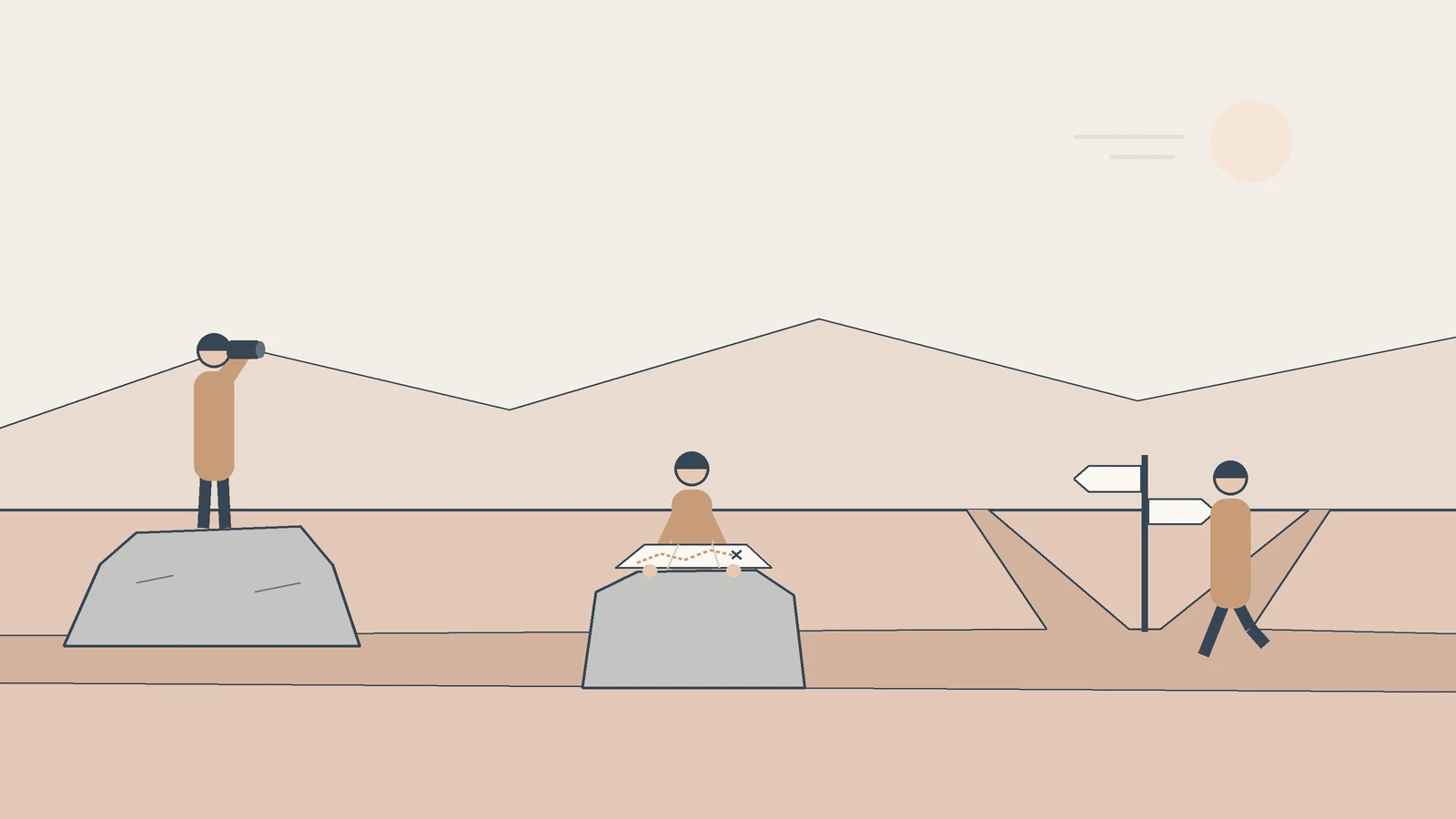

A property decision rarely comes when you are ready for it. It comes once every few years, with an agent waiting on an answer, a lender waiting on a form, or a family member waiting on a call. You may be deciding whether to buy, whether to keep what you have, or whether to sell. Each looks different, yet the same three steps fit all of them: see it clearly, weigh it calmly, then choose with confidence.
Here is how each step works when you are buying, when you are holding, and when you are selling.
1. See it clearly
Seeing clearly means having the whole picture in front of you before you judge any part of it. Many hard decisions are made on half a picture: the price without the weekly cost, the rent without the expenses, the sale price without what the sale would leave you.
Buying. Start with the land and what is likely to make it grow, then what the property would cost you each week after the rent comes in, not with its price. Know what you can borrow, and what you would be comfortable borrowing, which may be less. Then look at the land and the building separately, because they behave differently over the years.
Holding. Read the statements you already receive: the rent, the costs, and what your property manager reports each month. Put this year’s figures beside last year’s. A property you have owned for a while can drift without anyone noticing, and the statements are where it shows first.
Selling. Work out what a sale would leave you after the agent, the costs and the tax, rather than the sale price alone. Then picture what you would hold instead: cash, a smaller loan, another property, or something else. A sale is a swap, and a swap is easier to judge when you can see both sides of it.
2. Weigh it calmly
Weighing calmly means testing the decision against the years that go badly, as well as the years that go well. It is easier to do at your own table than on a call with an agent, so do it before the deadline arrives.
Buying. Ask what a bad year would look like. Suppose the property sits empty for a month, or the interest rate rises. Work out what each would cost you a week, and whether you could carry it without strain. If the figures only work when everything goes right, look again at the property. It also helps to know in advance what you would do if the market fell.
Holding. Ask what you would do if rates moved or rents fell. Know how large your buffer is, and how many months it would cover. Check that the cash flow still suits you, and that your loan does too, whether it is interest only or principal and interest.
Selling. Set out the years ahead twice, ten or more if you can: once if you sell, and once if you hold. Include the growth you would keep by holding, and what you could borrow against it, as well as the debt and the risk that borrowing adds. Write down the income, the costs, the debt, and what you would own at the end of each. Nobody can be sure of either version. Seeing them side by side still shows which one you would rather live with. Holding, or selling down sets out some of the middle paths.
3. Choose with confidence
Choosing with confidence does not mean being certain. It means you have done the first two steps, so you know what you are agreeing to and why. Then you commit, and you stop reopening the question.
Buying. Work through the checks in order, from finance to the contract. When they are done, give a firm yes or a firm no. A maybe that drags on tends to cost you time, and sometimes the property.
Holding. The choice is often smaller than it looks. You can keep the property as it is, or change one thing: the loan, the manager, the rent, or a repair you have been putting off. Changing one thing at a time lets you see what each change did.
Selling. If you decide to sell, take the same care choosing the agent that you would take choosing the property. Ask how they would sell it and what they would charge, and get the protections you want in writing before you sign. When to sell, and when to hold and selling in retirement go further.
Try it on one decision
Take one decision in front of you now, large or small. Write three lines: what you can see, what happens if it goes badly, and what you would choose. If one of the lines is hard to write, that is the part to work on first.
A deadline makes everything feel urgent. Before you decide, your first call is free.
Nicholas Lockhart